
Exhibition Review
Project StoryMachine relies on the premise that folklore is a crucial mode for identity- and community-building, especially in the culturally turbulent present day. And what better way to confirm this premise than through the celebration of folk culture and craft. The Un/Common People touring exhibition, curated by Simon Costin and Mellany Robinson (Museum of British Folklore) and Amy de la Haye (University of the Arts London), is exactly that: an affirmative centring of the ‘commoner’ as a creative, inquisitive, and insightful being.
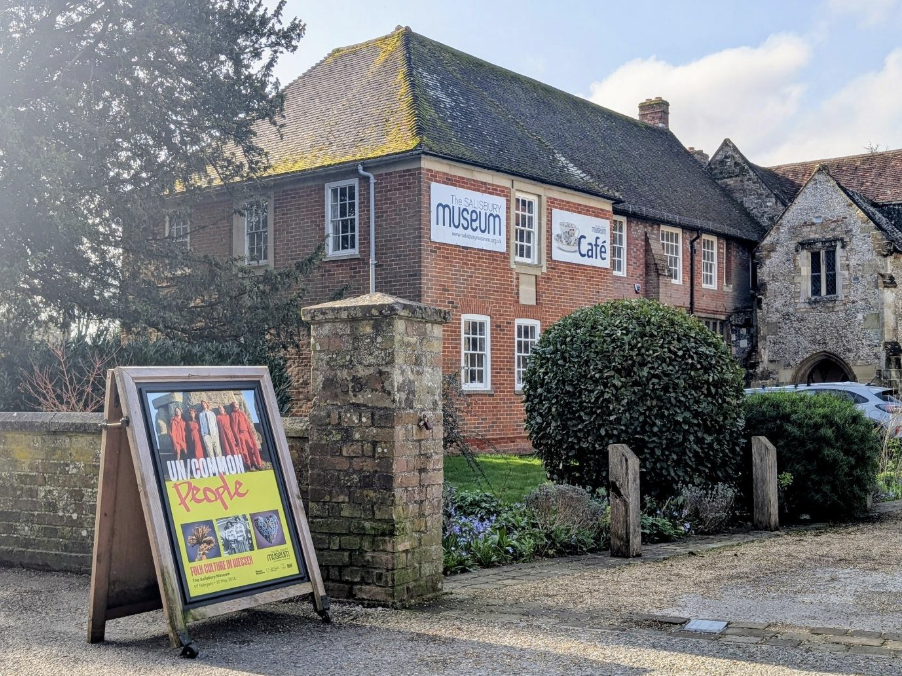
The exhibition had already toured Museum & Art Swindon, Wiltshire Museum and Poole Museum, when Anna Milon had the pleasure of visiting it in The Salisbury Museum. Each museum displayed items from their own collection interwoven with the core collection of the exhibition in an uplifting of local creativity.
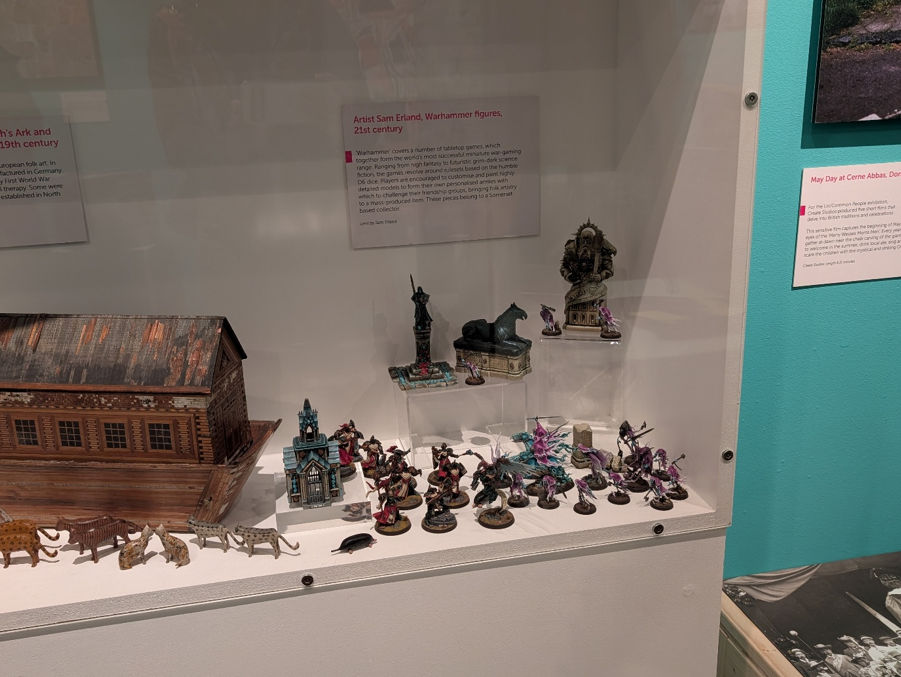
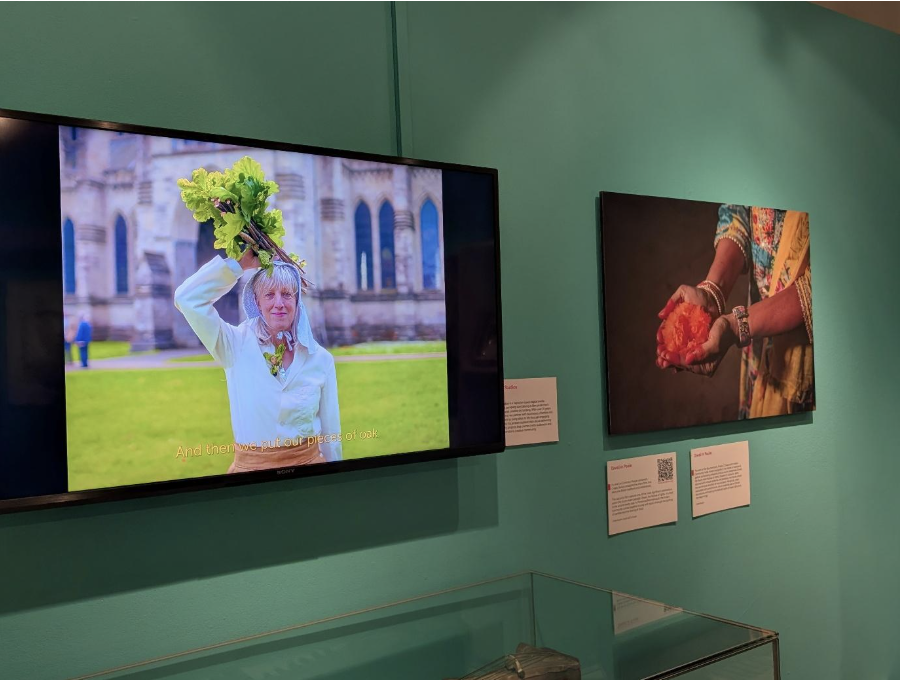
The exhibition’s scope included an expansive range of folk artistic expressions, from Oak Apple Day celebrations, captured on film by Create Studios and available to view online, to wargaming miniatures painted by players. Exhibits were thoughtfully grouped to weave together the diverse genders, ethnicities, cultural backgrounds, and ages of their makers, focusing on the causes and aims that folk sought to address through their craft. This way, hand-decorated lace-weaving bobbins shared space with skateboards painted by their owners. Anna was particularly taken by the positioning of the screen playing the Oak Apple Day film alongside a photograph of a woman cupping a handful of marigolds during a Diwali celebration. One of the images in the film was a close-up of a woman’s hand grasping an oak twig, so that the hands with the twig and with marigolds briefly seemed to reach towards one another (Anna tried to take a photo of this, but without much success).
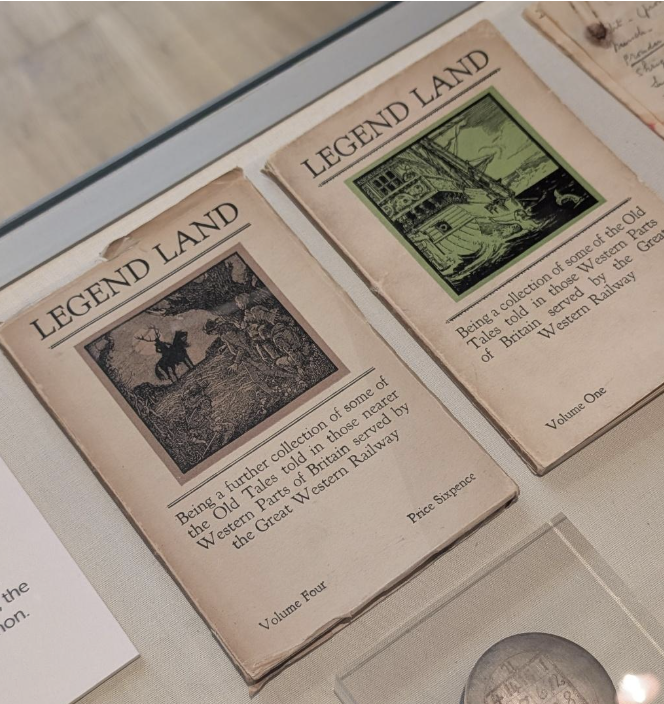
Another one of Anna’s favourite items was the Legend Land pamphlet produced by the Great Western Railway and featuring an image of Herne the Hunter on the cover. Its subtitle – ‘Being a further collection of some of the Old Tales told in those nearer Western Parts of Britain served by the Great Western Railway’ – illustrates how folklore has been used to promote industries including tourism, where stories were transplanted from their regions of origin to new audiences. This cover has served as an illustration in many of Anna’s talks, like an old friend whose photograph we chance upon now and then and smile.
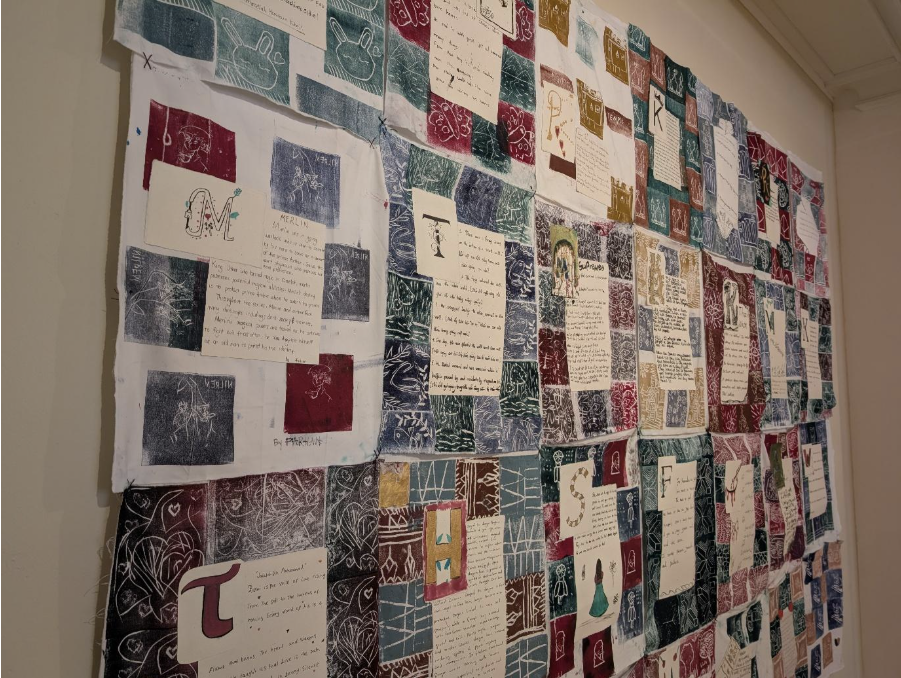
The conceptual conclusion of the exhibition sat in a patchwork mural of block-printed pieces of fabric, produced by local schoolchildren. The mural featured tales, personal anecdotes and pieces of community wisdom in text and image form. One of these was a fragment titled ‘Merlin’ that combined the story from the eponymous BBC series with renderings of Disney’s The Sword in the Stone visuals. The legendary sorcerer traveled from myth into fiction and back again in the hands of a new generation of storymakers.
Finally, the exhibition’s use of video, sound, and a charming map of folk tales and songs in Wessex demonstrated the capacity of new technologies to embellish and deepen public engagement with folklore. The map especially, with a grid overlaying a schematic map of Wessex, each square taken up by an illustration of a local tale or storied landmark, was an example of spatial hypertext – the positioning of various objects on it indicative of their relationships to each other. The map allowed visitors to explore Wessex’s folklore without a predetermined stop or start and encouraged them to delve deeper by pairing certain objects on it with audio performances available through nearby terminals (you can see for yourself by clicking this link). StoryMachine aims to foster a similar non-linear exploration of folktales, albeit in a digital space, with opportunities to focus on specific concepts and their relationships to each other.
The Un/Common People exhibition is open at The Salisbury Museum until May 10th, 2026.